
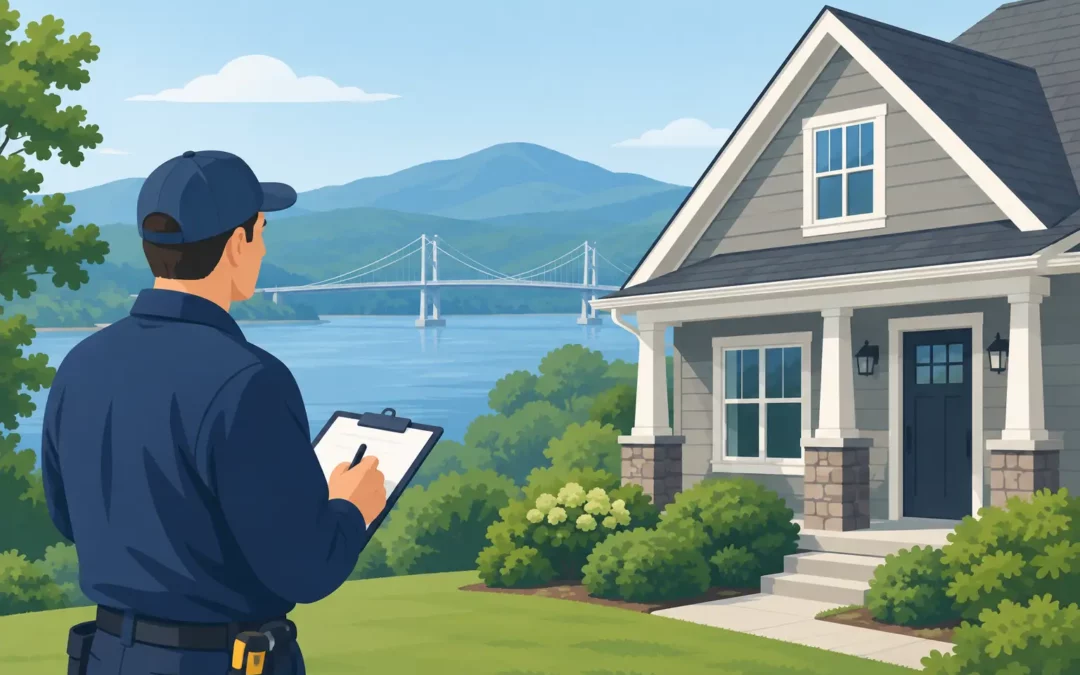
A restored Kingston colonial, a cabin near Kerhonkson, or a farmhouse on a few wooded acres can make an immediate impression. But home inspectors help buyers see what a showing cannot: the age and condition of the systems that make a property livable, safe, and worth the price.
For Hudson Valley buyers, an inspection is rarely a formality. Our housing stock ranges from newer suburban construction to century-old homes with multiple additions, stone foundations, private wells, septic systems, oil heat, and outbuildings. The goal is not to find a perfect house. It is to understand what you are buying, what may need attention soon, and how those findings should affect your next move.
What Home Inspectors Actually Do
A qualified home inspector performs a visual, noninvasive review of accessible components of a property. That typically includes the roof, exterior, foundation, basement or crawl space, structure, electrical panel and visible wiring, plumbing fixtures, heating and cooling equipment, insulation, ventilation, windows, doors, and major built-in appliances.
The inspector is not there to predict every future repair or certify that every system will run indefinitely. They also do not open walls, move stored belongings, or perform the specialized testing that certain properties require. Their report is a snapshot of observable conditions on inspection day, paired with professional recommendations about safety concerns, defects, maintenance needs, and when a specialist should take a closer look.
That distinction matters. A report may identify an older furnace that is operating at the time of inspection but nearing the end of its expected service life. That does not automatically mean the seller must replace it. It gives you information to price the risk into your decision and plan your budget realistically.
Why Hudson Valley Homes Need a Careful Eye
Local character often comes with local maintenance questions. A home in New Paltz or Rosendale may have a beautiful historic profile and a basement that deserves serious attention after years of moisture exposure. A rural retreat in Greene County may rely on a well and septic system rather than municipal water and sewer. A property in Orange or Dutchess County may include a propane tank, an aging oil tank, drainage challenges, or an accessory structure that has not been maintained to the same standard as the main house.
Older homes can be wonderful purchases, but buyers should expect some quirks. Knob-and-tube wiring, ungrounded outlets, older electrical panels, fieldstone foundations, and improvised renovations are not unusual in upstate New York. None of these conditions automatically ends a deal. Their significance depends on the extent of the issue, current safety standards, lender requirements, insurance considerations, and the buyer’s comfort with renovation.
Water is another recurring concern. Signs of basement dampness, grading that slopes toward the house, clogged gutters, aging sump pumps, and questionable drainage should be evaluated carefully. A dry basement on a sunny day is encouraging, but it is not the whole story. Ask thoughtful questions about seasonal water, past repairs, and how the property performs during heavy rain and snowmelt.
Inspection Is Not the Same as an Appraisal
Buyers sometimes assume an appraisal protects them in the same way as an inspection. It does not. An appraisal is primarily for the lender. The appraiser estimates market value based on the property, comparable sales, and overall condition. They may identify obvious issues, but they are not conducting a detailed systems review.
An inspection is for you. It helps you assess the physical condition of the home and prioritize future costs. In a competitive market, buyers may feel pressure to limit contingencies, but waiving an inspection should be a deliberate risk decision, not a default response to urgency. Even when a buyer chooses not to make the purchase contingent on inspection results, an informational inspection can still provide valuable clarity before closing.
Your strategy should match the property and the market. A recently built home with clear maintenance records presents a different risk profile than a 1900 farmhouse with a private septic system and a converted barn. A local real estate advisor can help you weigh the strength of your offer against the level of uncertainty you are taking on.
Choosing the Right Inspector
Experience matters, especially when the home is older, rural, or has unusual features. Look for an inspector who is properly licensed in New York, carries appropriate insurance, and has experience with the types of properties you are considering. Ask how long the inspection will take, whether you are encouraged to attend, when you will receive the report, and what is included in the fee.
The cheapest option is not always the best value. A thorough inspection can take several hours, and a report should be clear enough to distinguish immediate safety issues from routine maintenance and cosmetic observations. You want an inspector who explains findings plainly, welcomes questions, and avoids either extreme: minimizing meaningful concerns or treating every imperfect detail as a crisis.
It also helps to ask whether the inspector coordinates or recommends specialized evaluations when needed. Depending on the property, those may include radon testing, water quality testing, septic inspection, chimney evaluation, pest inspection, mold assessment, structural engineering, or review by a licensed electrician, plumber, or HVAC contractor.
Be Present for the Inspection
If your schedule allows, attend the last portion of the inspection or the full appointment. Walking through the property with the inspector turns a long written report into a practical lesson about the house. You can see where the shutoff valves are, learn how the heating system is configured, understand which cracks are worth monitoring, and ask what maintenance should come first.
Bring your agent into the conversation as well. A good agent can help separate repair items that are common for a home’s age from findings that affect value, safety, financing, or your willingness to proceed. At Windsor Realty Services, we encourage buyers to use this stage as a decision-making tool, not as a search for a flawless property.
Try not to make decisions from the report alone before discussing it with your inspector. Inspection reports can be lengthy because they document a home’s visible condition in detail. A page full of notes may sound alarming until you understand the difference between a loose handrail, an aging roof with limited remaining life, and active structural movement.
When to Bring in Specialists
Home inspectors are generalists by design. Their findings often tell you when a deeper review is warranted. If the report notes concerns with a chimney liner, for example, a chimney professional can determine the repair scope and cost. If it identifies possible foundation movement, a structural engineer may be the right next call.
For Hudson Valley properties with private systems, specialized testing is especially valuable. A well flow and water-quality test can reveal issues that are invisible at a kitchen faucet. A septic inspection can assess the tank, distribution components, and signs of system stress. These are not minor details when a repair or replacement can affect both your budget and your ability to use the home comfortably.
Environmental and location-specific questions may also deserve attention. Radon is a concern in parts of New York, and a test is straightforward compared with the cost of discovering elevated levels later. If a property has a buried oil tank, ask about documentation, location, and whether additional evaluation is appropriate. If a home is near a stream or in an area with drainage concerns, consider how water conditions may affect insurance, maintenance, and future resale.
Turning Findings Into a Smart Negotiation
After the inspection, buyers generally have three paths: move forward as planned, request repairs or a credit, or walk away if the contract allows and the findings materially change the decision. The right response depends on the contract terms, market conditions, repair estimates, and the importance of the issue.
Focus negotiations on material concerns. Health and safety hazards, significant water intrusion, major electrical defects, roof failure, structural problems, and nonfunctioning essential systems are different from aging paint, worn screens, or a driveway that will eventually need resurfacing. Asking a seller to address every small note can weaken an otherwise reasonable request and create unnecessary friction.
Credits can be useful when the buyer wants control over the work after closing. Repairs may be preferable when a lender or insurer requires a condition to be addressed before closing. Either way, obtain enough information to make a grounded request. A specialist’s estimate is often more persuasive than a vague concern pulled from an inspection report.
A house does not need to be perfect to be the right home. It needs to fit your life, your financial plan, and your willingness to take on its next chapter. Choose experienced home inspectors, ask direct questions, and let the findings give you confidence about what comes after the keys are in your hand.
Recent Comments