
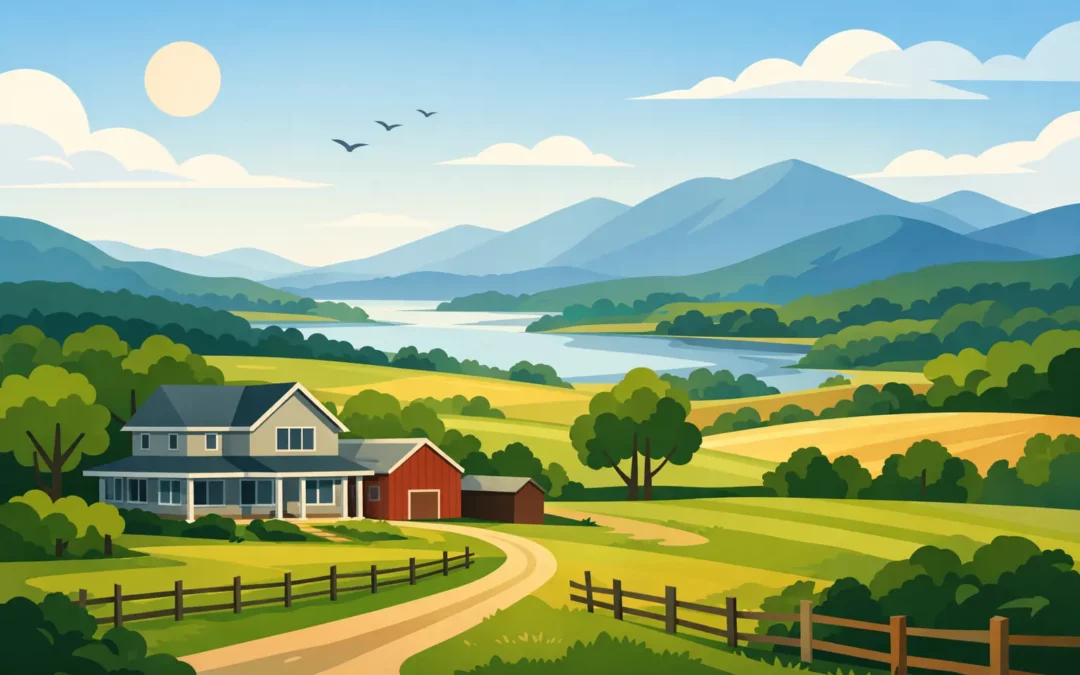
A five-acre listing in Kerhonkson does not mean the same thing as five acres in Rhinebeck, Greenville, or outside New Paltz. That is the first reality buyers run into when they start searching for hudson valley homes with land. Acreage is appealing, but the details behind that land – how it lays, what you can do with it, what it costs to maintain, and how location affects long-term value – matter just as much as the number on the listing.
For many buyers, land is the feature that turns a house into a lifestyle purchase. It can mean privacy, room for gardens, space for animals, a workshop, trails, or simply a quieter buffer from neighbors. In the Hudson Valley, it can also mean a more complex buying process. A home on a village lot is one kind of transaction. A home with 3, 10, or 25 acres is another.
Why hudson valley homes with land attract so much interest
The appeal is easy to understand. Buyers moving from denser areas often want what the Hudson Valley offers best: open space, mountain views, mature trees, and a stronger sense of separation from daily noise. Local buyers may be looking for more usable property, a multigenerational setup, or a place that supports hobbies and small-scale agricultural use.
That demand spans several property types. Some buyers want a classic farmhouse with pasture and outbuildings. Others are searching for a contemporary home tucked into the woods with enough acreage to guarantee privacy. Some are not interested in working the land at all – they simply want breathing room and a setting that feels distinctly upstate.
The trade-off is that more land usually brings more variables. A larger parcel can be a major asset, but only if it fits how you plan to live.
Not all land is equally usable
One of the biggest mistakes buyers make is assuming all acreage carries the same practical value. It does not. Two ten-acre properties can perform very differently depending on topography, wetlands, wooded coverage, road frontage, and access.
A parcel may look generous on paper but include steep slopes, rocky terrain, protected areas, or portions that are difficult to reach. Another may offer less total acreage but far more functional outdoor space for recreation, gardening, future structures, or animals. This is why experienced local guidance matters. Photos and tax records rarely tell the whole story.
In parts of Ulster and Greene Counties, for example, scenic hillside sites can be beautiful but come with grading, drainage, or driveway considerations. In Dutchess County, a property may command a premium because its land is flatter, more open, or easier to improve. In Orange County, proximity to commuter routes can boost value even when the acreage itself is more modest.
Location still drives value
Buyers searching for Hudson Valley homes with land sometimes focus so heavily on acreage that they overlook the surrounding market. In reality, location remains one of the strongest drivers of resale value and day-to-day satisfaction.
Land near sought-after towns such as New Paltz, Kingston, Rosendale, and Rhinebeck often carries a premium because buyers are paying for both space and access. They want room to spread out without feeling isolated from restaurants, hiking, farm stands, schools, or culture. A property farther out may offer more acreage for the money, but that savings can come with longer drives, fewer services, and a different buyer pool when it is time to sell.
That does not mean one choice is better across the board. It depends on your priorities. If your goal is a weekend retreat, a more rural setting may be exactly right. If you are buying a primary residence and expect regular school, shopping, or commuter needs, convenience can matter as much as privacy.
Zoning, restrictions, and intended use
Land invites ideas. Buyers imagine adding a guest house, building a barn, keeping chickens, installing a pool, or creating a short-term rental setup. Sometimes those ideas work easily. Sometimes they run into zoning limits, permit requirements, or environmental constraints.
Before falling in love with a property, it is worth understanding what the town allows. Zoning can differ dramatically from one municipality to the next. So can rules around accessory dwellings, subdivision potential, agricultural use, and short-term rentals. A property that seems perfect for future expansion may have tighter limits than expected.
This is especially important for buyers thinking beyond the house as it exists today. If the land is part of the value proposition, your due diligence should focus on what that land can realistically support, not just what you hope to do with it.
Utilities and maintenance can change the budget fast
A larger property often shifts the cost conversation. Buyers may stretch financially for acreage without fully accounting for what ownership looks like after closing. Private wells, septic systems, long driveways, retaining walls, fencing, tree work, and snow removal can all become part of the equation.
None of that should scare buyers away. It simply means the monthly cost of owning homes with land is not always captured by mortgage, taxes, and insurance alone. A wooded property may require regular maintenance to keep trails clear or protect structures from falling limbs. A long gravel drive can need grading. Septic inspections and well testing become more significant than they might be in a more suburban purchase.
In exchange, many buyers feel the lifestyle value is more than worth it. The key is going in with clear expectations instead of treating acreage as a free bonus.
Financing can be a little different
Most Hudson Valley homes with land can still be financed conventionally, but the details matter. Lenders may take a closer look when acreage is unusually high, when there are multiple structures, or when the property has features that suggest mixed residential and agricultural use. Appraisal can also become more nuanced because true comparables are harder to find.
This is where buyers benefit from working with professionals who understand the local inventory. A standard suburban valuation mindset does not always translate well to the Hudson Valley. Properties are often more unique, and value can be influenced by outbuildings, views, privacy, road access, and the quality of usable land.
For cash buyers, the process may feel more flexible, but due diligence is still essential. Skipping inspections or land-use research because a property seems rare can create expensive surprises later.
What buyers should look for during tours
When touring homes with land, it helps to think beyond the kitchen, finishes, and square footage. Walk the property if conditions allow. Ask where the actual boundaries are, not just where the lawn ends. Pay attention to drainage, sun exposure, slope, and how the land relates to neighboring parcels.
A few practical questions often reveal a lot. How is the property accessed in winter? Has the land been cleared or improved recently? Are there old stone walls, streams, easements, or shared drive arrangements? Is the acreage mostly wooded, partially open, or currently unused because of terrain? These details shape both enjoyment and future costs.
It also helps to consider the emotional side honestly. Some buyers love the idea of ten acres but realize they only want to actively use one or two. Others think three acres will be enough, then discover they want more privacy than that lot can provide. Seeing a range of property types across counties can sharpen that instinct quickly.
The best fit is usually lifestyle-led, not acreage-led
The most successful purchases tend to start with how you want to live, then work backward into property criteria. If your dream is a manageable full-time home with a garden, detached studio, and easy access to town, that points to a different search than a buyer who wants hunting land, horses, or a long private drive in a wooded setting.
Acreage by itself is not the goal. The goal is a property that supports your version of Hudson Valley living while staying aligned with your budget, your maintenance comfort level, and your long-term plans. Sometimes that means buying less land in a stronger location. Sometimes it means going farther out to gain more flexibility and value.
At Windsor Realty Services, that is often where the real work begins – helping buyers separate what sounds good online from what will actually feel right after move-in. In a market this varied, local knowledge is not just helpful. It is what keeps a promising search from turning into an expensive mismatch.
If you are serious about buying land in the Hudson Valley, give yourself room to ask better questions. The right property is not just the one with the most acres. It is the one that makes those acres useful, enjoyable, and worth owning for years to come.
Recent Comments