
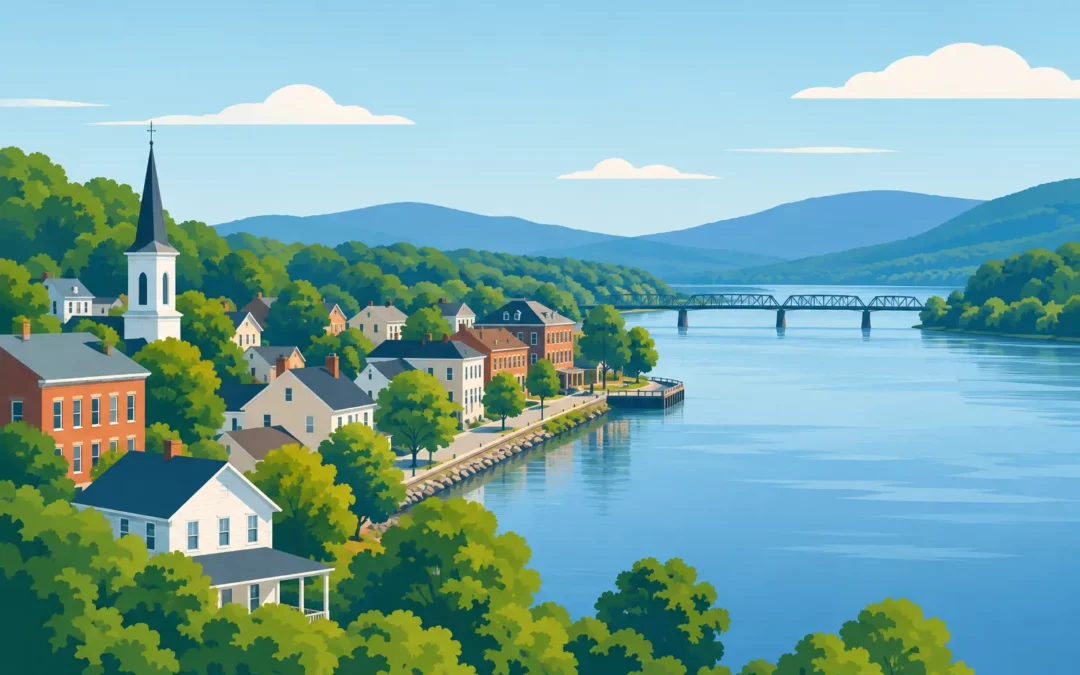
A Saturday spent on Kingston’s waterfront, a coffee stop in Beacon before a Metro-North ride, or an evening walk along Hudson’s historic streets can make a buyer feel ready to move north immediately. But the best Hudson Valley rivertowns are not interchangeable. Each has its own housing stock, commute profile, year-round energy, flood considerations, and price point – all of which matter once the weekend is over and the home search begins.
For buyers considering a primary residence, second home, or investment property, the right town is usually the one that fits daily life as well as it fits the postcard. Here are eight rivertowns worth a closer look, along with the practical questions that help turn a great visit into a smart purchase.
What Makes a Hudson Valley Rivertown Worth Buying In?
The Hudson River is a major draw, but proximity to the water alone does not determine value. A strong rivertown tends to offer a real town center, access to recreation and culture, a mix of housing options, and dependable transportation or road connections. The most competitive markets also have limited inventory, particularly for renovated historic homes and properties within walking distance of shops, dining, and the waterfront.
Buyers should look beyond a town’s main street. Two homes only a few blocks apart can have very different pricing, tax burdens, road noise, waterfront access, and insurance requirements. In lower-lying areas, flood zone status and the cost of flood insurance deserve careful review before an offer is written.
The Best Hudson Valley Rivertowns for Different Lifestyles
Kingston
Kingston offers one of the Hudson Valley’s most complete year-round lifestyles. New York State’s first capital has distinct neighborhoods with very different personalities: the Stockade District’s historic stone homes, Uptown’s restaurants and shops, Midtown’s evolving residential streets, and the Rondout waterfront’s maritime character.
For buyers, Kingston stands out for variety. You may find a compact Victorian, a renovated colonial, a loft-style condo, or a larger home just outside the city limits. It is especially appealing to people who want arts, dining, healthcare, schools, and community activity without relying on a car for every errand. The trade-off is that well-located, move-in-ready homes can attract strong interest, and condition varies widely in older housing stock. Budget realistically for inspections, updates, and property taxes.
Beacon
Beacon has become a leading choice for buyers who want a walkable small city with a direct rail connection to New York City. Main Street is active throughout the year, with galleries, restaurants, independent shops, and a strong creative identity. Mount Beacon and the riverfront add easy access to outdoor time without leaving town.
Housing demand in Beacon remains high because it checks several boxes at once: commuter access, a lively downtown, and a distinctive sense of place. That demand can make entry prices challenging, particularly near Main Street or in neighborhoods with mountain and river views. Buyers looking for more space may need to consider homes farther from downtown, where walkability gives way to a more residential feel.
Rhinebeck
Rhinebeck feels polished but not overly formal, with a village center built for strolling and a strong calendar of local events. It attracts buyers who appreciate classic architecture, established neighborhoods, farm-to-table dining, and access to the wider Dutchess County countryside. The nearby Rhinecliff train station is another practical advantage for regular city travel.
The market here often favors buyers seeking a refined primary or second-home experience. Historic homes, gracious porches, and village-adjacent properties are highly sought after, and prices generally reflect that demand. Rhinebeck can be an excellent long-term choice, but buyers should decide early whether being able to walk to the village is essential. Expanding the search radius may create more options, though it can substantially change the experience of living there.
Hudson
Hudson has a bold personality. Its celebrated Warren Street corridor combines antiques, design, restaurants, hotels, and galleries, while its Amtrak station makes it one of the more accessible northern Hudson Valley destinations for New York City buyers. The city’s historic building stock provides distinctive opportunities, from row houses and brick homes to mixed-use properties.
It is a compelling market for buyers who want culture and architectural character, but it rewards due diligence. Older properties can come with aging mechanical systems, preservation considerations, and renovation costs that are easy to underestimate. Investors should also understand local regulations and neighborhood-specific demand rather than assuming every stylish property will perform the same way as a short-term or long-term rental.
Saugerties
Saugerties brings together a welcoming village center, Catskill Mountain access, and a relaxed river-town pace. The lighthouse, waterfront paths, local businesses, and nearby outdoor destinations give it broad appeal for full-time residents and weekend buyers alike. It is also well positioned for exploring Woodstock, Kingston, and the northern Catskills.
Homes range from village properties near shops to larger houses on wooded roads outside town. That range can make Saugerties feel more attainable than some higher-profile rivertowns, although pricing depends heavily on condition, acreage, and location. For buyers who want a community feel without needing a highly urban downtown, Saugerties deserves serious consideration.
Cold Spring
Cold Spring is one of the most picturesque villages on the Hudson, known for preserved 19th-century homes, river views, and an easy train ride to Manhattan. Its compact Main Street and access to hiking make it a natural choice for buyers who want an active, car-light weekend lifestyle.
The same qualities that make Cold Spring special also limit supply. Inventory within the village can be tight, and desirable homes often command a premium. Buyers may find better value in nearby Philipstown communities, but they should be clear about what they are giving up or gaining: more space and privacy can mean less walkability and a different daily rhythm.
Catskill
Catskill is a town on the rise, with a historic Main Street, an increasingly visible creative community, and access to both the Hudson River and the Catskill Mountains. It appeals to buyers who want character, outdoor access, and room for future growth without the pricing pressure found in every better-known market.
This is a market where block-by-block knowledge matters. Some properties offer immediate village convenience, while others are more rural and require a different approach to utilities, maintenance, and winter driving. Buyers considering a renovation should build a realistic timeline and contingency budget. The right Catskill property can be a smart lifestyle purchase, but only when the scope of work matches the buyer’s capacity.
Newburgh
Newburgh offers dramatic Hudson River views, significant historic architecture, and a location that is convenient to major roads, Stewart Airport, and nearby rail service. Its waterfront has gained momentum, while neighborhoods farther uphill include an impressive collection of Victorian and early 20th-century homes.
Newburgh can offer more square footage and architectural detail for the money than some neighboring river markets. At the same time, buyers should evaluate each neighborhood carefully and understand the condition of the specific home rather than relying on broad assumptions about the city. For buyers comfortable with a more urban setting and a property that may need vision, Newburgh can present meaningful opportunity.
How to Narrow Your Rivertown Search
Start by identifying the non-negotiable parts of your week. If you will commute to Manhattan twice a week, train access may matter more than a larger yard. If you are relocating full time with children, school options, medical care, grocery access, and winter road conditions deserve as much attention as restaurants and views. If the property is a second home, consider how much upkeep you truly want from a distance.
Then compare the total carrying cost, not just the list price. Property taxes, insurance, utility systems, septic or well maintenance, and renovation needs can change the financial picture quickly. Waterfront or water-view homes may also involve additional insurance, drainage, and permitting questions.
A focused local search helps buyers move with confidence when the right home appears. Windsor Realty Services works with buyers across the Hudson Valley to connect lifestyle priorities with neighborhood-level market knowledge, from first tour through closing.
The best choice may be the village where you can walk to dinner, the small city where you can build community, or the quieter edge-of-town home that gives you room to breathe. Visit on a weekday, drive the surrounding roads, and picture an ordinary February morning as clearly as a sunny July afternoon. That is often where the right rivertown reveals itself.
Recent Comments