
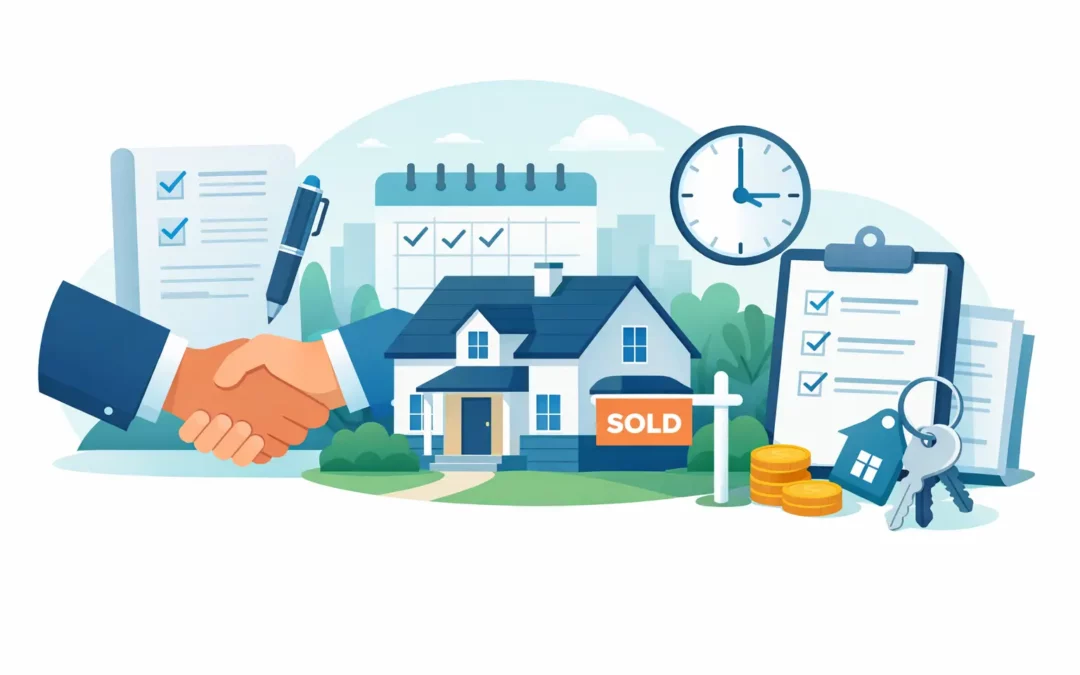
An accepted offer is a major milestone, especially when you have finally found a home that fits your life in the Hudson Valley. But what happens after offer accepted is not simply a countdown to moving day. In New York, there are several critical steps between a seller saying yes and the moment you receive the keys.
The period after acceptance is where your agent, attorney, lender, inspector, and title professionals work together to turn an agreed-upon price into a completed purchase. Timelines vary by property, financing, and contract terms, but knowing what comes next helps you make decisions with confidence rather than feeling rushed.
What Happens After Offer Accepted in New York?
In many states, an accepted offer immediately creates a binding contract. New York works differently. Once your offer is accepted, the listing agent typically circulates a deal sheet with the agreed price, deposit amount, financing details, contingency dates, and contact information for the attorneys and lenders involved.
This starts the attorney review and contract process. Until contracts are fully negotiated, signed, and exchanged, either side may generally walk away. That can feel unsettling for buyers, particularly in competitive markets such as New Paltz, Kingston, Rosendale, or Kerhonkson, but it is also the time to make sure the legal and practical details are right.
Your real estate agent remains an important point person during this stage, coordinating communication and helping keep deadlines visible. Your attorney handles legal advice and contract language, while your lender focuses on underwriting and mortgage approval.
Hire or confirm your real estate attorney
If you have not already selected an attorney, do so immediately after acceptance. New York real estate attorneys review the proposed contract, negotiate terms with the seller’s attorney, order or examine title information, and prepare you for closing.
Your attorney may seek clarification on items such as fixtures that will stay with the property, closing date flexibility, inspection concerns, easements, well or septic systems, and whether the property is being sold subject to any specific conditions. For older Hudson Valley homes, this careful review can be particularly valuable. A charming farmhouse, village home, or converted barn may have property details that deserve more attention than a newer subdivision home.
Schedule your home inspection quickly
Most buyers arrange an inspection as soon as possible, often before contracts are signed or within the inspection period established in the deal. The inspection is your opportunity to understand the home’s condition beyond what was visible during a showing.
A general home inspection commonly looks at the roof, foundation, electrical system, plumbing, heating and cooling equipment, insulation, drainage, and major appliances. Depending on the property, you may also want specialized inspections for radon, pests, septic, well water, mold, chimney condition, underground oil tanks, or structural questions.
Inspection findings do not automatically mean a deal should end. Nearly every home has items that need repair, maintenance, or future budgeting. The meaningful question is whether the issue changes the home’s value, safety, financing, or your willingness to proceed. Your agent can help you compare the findings with local property norms and decide whether to request repairs, a credit, a price adjustment, or no change at all.
Contract Signing and Your Down Payment Deposit
After inspection concerns and contract details are resolved, both parties sign the contract. When the signed contracts are exchanged, the agreement becomes binding, subject to the contingencies written into it.
At that point, you will usually submit your contract deposit, often called the down payment, to the seller’s attorney’s escrow account. This is not the same as your full cash down payment due at closing. The contract deposit is credited toward your purchase at closing and is held in escrow under the terms of the agreement.
The amount depends on the transaction. Ten percent is common in New York, but buyers and sellers can agree to a different amount. Your agent and attorney can help you understand what is customary for the property and market conditions. Never send funds until you have independently verified the wiring instructions with the attorney’s office by phone. Wire fraud is a real risk in real estate transactions.
Move From Preapproval to Full Mortgage Approval
A preapproval helped establish that you could make a competitive offer. Once you are in contract, your lender begins the full underwriting process. You will submit updated financial documents, and the lender will verify your income, assets, employment, credit, debt obligations, and the property itself.
Expect requests for paperwork even if you were thoroughly preapproved. A new bank statement, an explanation for a large deposit, proof of insurance, or an updated pay stub can all be normal underwriting requests. Respond promptly and avoid making financial changes without speaking with your lender first.
That means this is not the time to open a new credit card, finance furniture, buy a car, change jobs, move money around without documentation, or make large cash deposits. Even positive changes can create questions that slow approval.
The appraisal protects the lender and informs the deal
If you are financing the purchase, the lender will order an appraisal. An independent appraiser evaluates the home and compares it with recent sales to determine whether the property supports the contract price.
When an appraisal comes in at or above the purchase price, the loan process can continue as planned. When it comes in low, the situation depends on your contract and financing terms. You may be able to renegotiate the price, bring additional cash to closing, challenge the appraisal with relevant comparable sales, or decide not to proceed if your contract gives you that right.
A low appraisal is not always a statement that you made a poor choice. In a low-inventory area or for a distinctive home with acreage, views, a guest cottage, or major improvements, recent comparable sales may not perfectly capture buyer demand. Still, it is a financial issue that needs a clear strategy.
Title, Insurance, and Property Due Diligence
While financing moves forward, your attorney and title company investigate the property’s ownership history and legal status. The title search looks for liens, unpaid taxes, easements, judgments, boundary issues, or other matters that could affect your ownership.
Your attorney will review the title report and work with the seller’s side to resolve problems that must be cleared before closing. In rural and semi-rural areas, this process can also bring attention to rights-of-way, shared driveways, private roads, septic records, survey discrepancies, or restrictions affecting future plans.
You will also need homeowners insurance in place before closing. If the home is in a flood-prone area, has an older roof, uses a wood stove, or has a unique construction type, start this process early. Some properties require additional coverage or a more detailed insurance review than buyers expect.
If you are buying a condominium, co-op, or home in a homeowners association, review the governing documents, fees, budgets, rules, and any pending assessments. Lifestyle fit matters, but so do rental restrictions, pet policies, maintenance obligations, and financial health of the association.
The Final Walk-Through and Closing Day
Shortly before closing, you will complete a final walk-through of the property. This is not another inspection. It is a chance to confirm that the home is in substantially the agreed condition, negotiated repairs were completed, included fixtures remain, and the seller has moved out as required.
Bring your contract and any repair agreements. Turn on faucets, test key appliances, check that garage door openers and remotes are present, and look for unexpected damage. If something is wrong, notify your attorney and agent immediately. Many issues can be resolved, but they are easier to address before papers are signed and funds are released.
At closing, you will review and sign the loan and ownership documents, provide any remaining funds required, and receive confirmation that the deed and mortgage documents will be recorded. Closing costs vary, but buyers should plan for lender fees, title-related charges, prepaid taxes and insurance, attorney fees, and other transaction expenses outlined by their lender and attorney.
Possession is often delivered at closing, though the contract may set a different arrangement. Once the transaction is complete, you can change the locks, transfer utilities, and begin making the house your own.
Buying in the Hudson Valley can mean choosing more than square footage. It can mean a shorter walk to a village main street, room for a garden, a view of the ridge, or a place where weekends feel different. The work after acceptance is what protects that vision. Stay responsive, ask questions early, and lean on experienced local professionals who can help you move from accepted offer to a closing day that feels well earned.
Recent Comments